Guide: the basics first
Healthy weight basics: sleep, activity and fullness, with sources
Healthy weight basics rest on food, movement, sleep and stress together, not on one product. The HHS guidelines set 150 to 300 minutes of moderate activity a week plus muscle work on 2 or more days, and adults need 7 or more hours of sleep. No trial tested SodaSlim, so it has no place in this evidence.
Written by the SodaSlim label deskUpdated
The basics
What are the basics of a healthy weight?
The basics are food, physical activity, sleep and stress, handled together. CDC's healthy-weight page frames weight that way and says fad diets tend not to last (CDC, About Healthy Weight and Growth).
That page does not mention supplements. It is a general public-health source, so it cannot predict what any one person's body will do, and it does not promise a number on the scale.
Weight is also a sensitive subject. A body can be healthy at many sizes, and a doctor who knows your history is a better judge than a chart or an ad. The sections below give the best-sourced habits first, one at a time, with their numbers.
Where a capsule fits comes last, and the short version is this: we found no study that tested SodaSlim, so it is not part of the evidence base for any habit below.
Sleep
Does sleep affect weight?
Short sleep is linked with eating more, according to a review of trials. People who were kept to short sleep took in about 385 more calories a day, and their energy use did not change (Al Khatib 2017, sleep and energy balance).
That is a review of controlled sleep-restriction studies in adults, not a promise about your weight. It says what happened to food intake, and it does not say how many kilograms followed.
CDC says adults need 7 or more hours of sleep a night (CDC, Sleep). For a reader taking a caffeine supplement the point matters twice. EFSA notes that 100 mg of caffeine can affect sleep for some people (EFSA, caffeine safe intakes), and one SodaSlim capsule holds at least 138 mg. The label gives no time of day, so late caffeine is your call, ideally with a clinician.
Write down bedtime, wake time and your last caffeine for two weeks. If sleep gets shorter after you add any caffeine, that is worth a conversation with a clinician.
Activity
What do the physical activity guidelines for adults say?
The US guidelines for adults say 150 to 300 minutes a week of moderate activity, plus muscle-strengthening on 2 or more days (Piercy 2018, Physical Activity Guidelines) (CDC, Adult activity). Walking counts as moderate activity.
Spread over a week, 150 minutes is 30 minutes on 5 days, and 300 minutes is about 43 minutes a day. Short bouts add up, so three 10-minute walks are 30 minutes.
| Type | Amount | Example |
|---|---|---|
| Moderate aerobic | 150 to 300 minutes a week | Brisk walking, 30 minutes on 5 days |
| Muscle strengthening | 2 or more days a week | Body-weight moves or resistance bands |
| Everyday movement | Counts toward the total | Stairs, errands on foot |
If you have heart disease, high blood pressure or a joint problem, ask a clinician how to start. Chest pain, fainting or trouble breathing during exercise: call 911.
Protein and fibre
Do protein and fibre affect fullness?
Fibre has a sourced answer, and it is partial. A review found that viscous fibres reduced appetite in 59% of comparisons, against 14% for other fibres, while the effect on weight was small (Wanders 2011, fibre and appetite).
The gap is 59 minus 14, or 45 percentage points. It describes food fibre such as oats, beans and fruit. It does not describe a capsule.
Protein is a common claim about fullness, but we hold no source for it in this guide, so we give no numbers. If you want a protein target, a registered dietitian can set one around your health.
Water, fibre and protein are everyday foods. None of them is a reason to buy a supplement, and a supplement is not a reason to skip them.
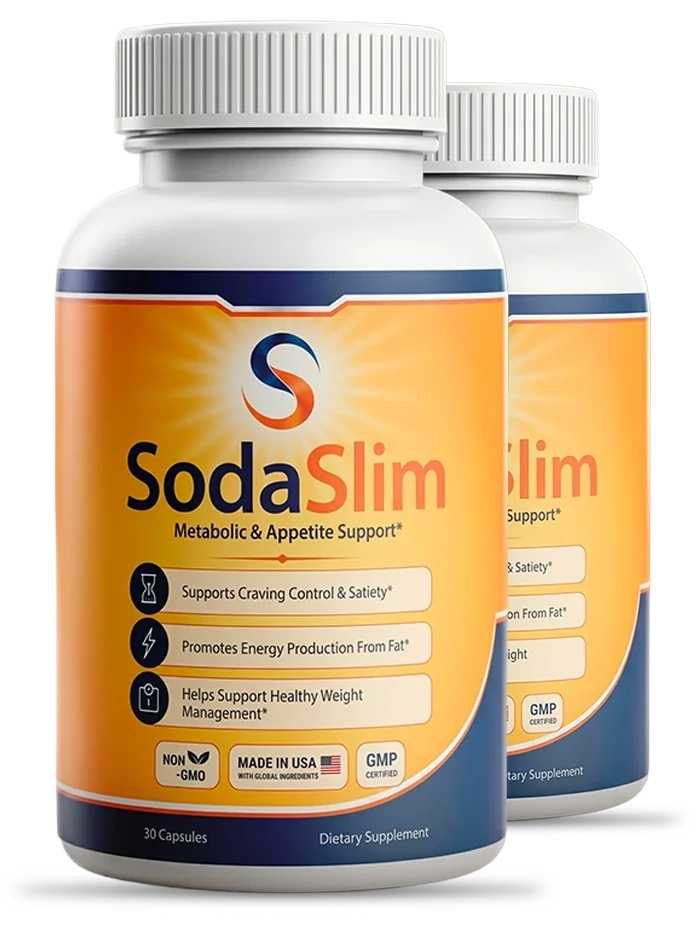
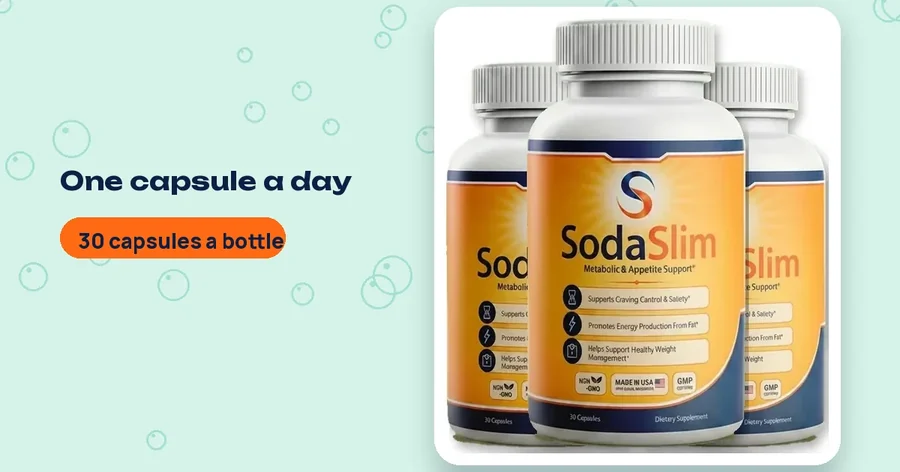
SodaSlim capsules: 30 to a bottleOne capsule a day · 2, 3 or 6 bottles · price and shipping shown at checkout
See the priceSix habits
What habits are best supported for a healthy weight?
Six habits have sources in this guide: sleep, movement, fibre, the whole routine, blood pressure checks and a clinician's options. Each card links to its source.
- Sleep firstIn a review of trials, short sleep raised food intake by about 385 calories a day without changing energy use; adults need 7 or more hours a night. (Al Khatib 2017, sleep and energy balance) (CDC, Sleep)
- Moving most daysThe HHS guidelines say 150 to 300 minutes of moderate activity a week plus muscle strengthening on 2 or more days; walking counts. (Piercy 2018, Physical Activity Guidelines) (CDC, Adult activity)
- Fibre and fullnessA review found viscous fibres reduced appetite in more studies (59%) than other fibres (14%), though the effects on weight were small. (Wanders 2011, fibre and appetite)
- The whole routineCDC's healthy-weight page points to food, activity, sleep and stress together, and says fad diets tend not to last. (CDC, About Healthy Weight and Growth)
- Know your blood pressureHigh blood pressure usually has no symptoms and matters when you add caffeine; normal is under 120/80. (AHA, BP readings) (CDC, High blood pressure)
- A clinician's optionsNIDDK describes prescription weight medicines, who qualifies and why lifestyle comes first; a supplement is not on that list. (NIDDK, Prescription weight medications)
Blood pressure sits on the list because caffeine matters more when it runs high. Normal is under 120/80, and high blood pressure usually has no symptoms (CDC, High blood pressure). Only a reading tells you.
Medical options
When should you talk to a clinician about weight?
Talk to one whenever weight worries you, you take a medicine, or you have a condition such as high blood pressure, diabetes, thyroid or liver disease.
NIDDK describes prescription weight medicines for adults with a body mass index of 30 or more, or 27 or more with weight-related health problems, and says lifestyle comes first (NIDDK, Prescription weight medications). A supplement is not on that list.
Keep taking prescribed medicine exactly as directed. Never stop or change one because you started a supplement. Chest pain, fainting or trouble breathing: call 911.
Where SodaSlim fits
Where does SodaSlim fit in healthy weight basics?
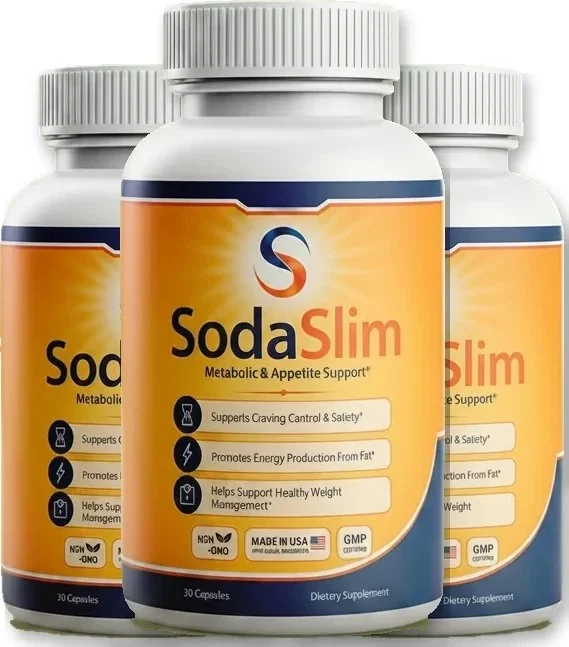
SodaSlim is a dietary supplement, not a habit and not a treatment, and no trial tested it.
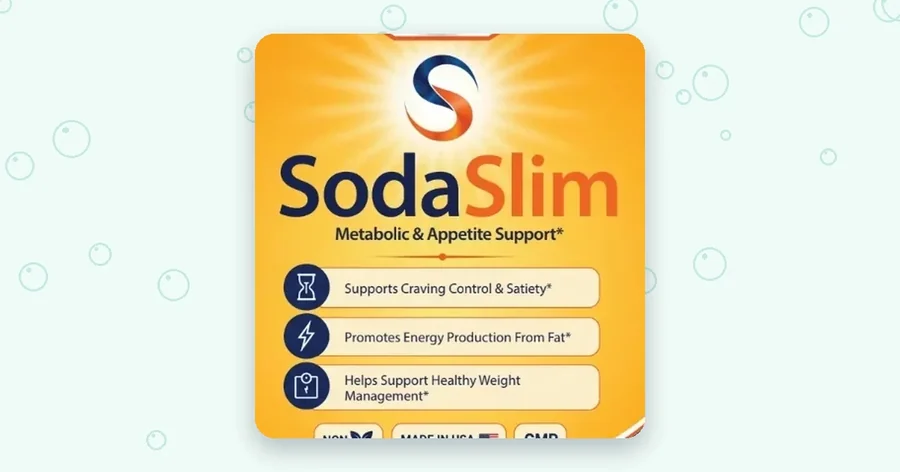
The front line reads "Helps Support Healthy Weight Management*", and the star leads to the FDA statement that the claim has not been evaluated. Reviews of single ingredients found small or uncertain differences. Read the claims page and the ingredient pages for each row, and the results timeline for what to track.
FAQ
SodaSlim questions people ask
How much sleep do adults need?
CDC says adults need 7 or more hours of sleep a night. A trial review found that short sleep raised food intake by about 385 calories a day without changing energy use, so sleep is worth protecting before any product is considered.
How many minutes of exercise do adults need a week?
The HHS guidelines say 150 to 300 minutes of moderate activity a week, plus muscle strengthening on 2 or more days. That is 30 minutes on 5 days at the low end. Walking counts. Ask a clinician first if you have a heart condition.
Does fibre help you feel full?
Some does. A review found viscous fibres reduced appetite in 59% of comparisons against 14% for other fibres, with small effects on weight. That is food fibre, such as oats and beans, and not a statement about any capsule.
Does protein make you feel full?
We found no source we can cite for protein in this guide, so we give no figures. A registered dietitian can set a protein target that fits your health and medicines.
Do fad diets work?
CDC says fad diets tend not to last. Its healthy-weight page points to food, activity, sleep and stress together, and it does not mention supplements. A plan you can keep up is more useful than a fast one you drop.
When do doctors use weight medicines?
NIDDK describes prescription medicines for adults with a body mass index of 30 or more, or 27 or more with weight-related health problems, after lifestyle changes. Ask a clinician whether you qualify. A dietary supplement is a different product.
Is SodaSlim part of a healthy weight plan?
No trial tested SodaSlim, so we cannot place it in a plan. If you choose to take it, the label says one capsule daily and to consult a physician first, and you should count its 138 mg or more of caffeine against your day.
Who wrote this
Written and reviewed by
Pages built from the label, the seller's brief and linked NIH, FDA, CDC, FTC and peer-reviewed sources.
Last updated . Read our editorial standards and how we check reviews. This website is the information site of a USA Authorized SodaSlim Retailer. It is not the manufacturer, and the label names Gex Corporation LLP (Ogden, Utah) as the distributor. We earn money when you buy through our order links.
Keep reading
More about SodaSlim
USA Authorized SodaSlim Retailer
Ready to look at SodaSlim?
Check your medicines and your caffeine first, and ask a clinician if you are unsure. Then pick a pack: 2, 3 or 6 bottles of 30 capsules. The checkout shows the price, the shipping and the money-back guarantee as printed there.
- Secure checkout on the seller's site
- Money-back guarantee, as printed at checkout
- Shipping shown at checkout