Guide: ad-reading
How to read weight loss ads: claims, studies, photos and reviews
To read weight loss ads, ask what exactly is claimed, who tested it, at what dose and for how long. The FTC says health claims need reliable scientific evidence and that testimonials are not proof. A 2014 FTC case involved a green coffee extract ad that leaned on a flawed trial. No trial tested SodaSlim.
Written by the SodaSlim label deskUpdated
The method
How do you read a weight loss ad?
Read it like a label: find the exact claim, then ask what evidence supports that claim, for which people, at what dose and over how long.
The FTC's consumer guide to weight-loss ads is a good starting point (FTC, Truth Behind Weight Loss Ads). The agency also says health claims need reliable scientific evidence, and that testimonials do not stand in for it (FTC health products guidance).
Find the verb
"Supports" is a structure line. A verb that names a disease or a fixed result is a promise about the body, not a structure line. Check which one you are reading.
Find the study
Is it named, and does it test this exact product? Studies of one ingredient are not studies of a mix.
Check dose and time
Compare the amount in the study with the amount in the product, and the weeks with the weeks.
Check the photos and reviews
A photo shows one person on one day. A review needs a real order behind it.
Check the terms
Price, shipping and refund terms should be readable before you pay.
The rules
What do FTC and FDA rules say about weight loss supplement claims?
Two agencies share the job. FDA does not approve supplements before sale, and the FTC polices whether advertising is truthful and backed by evidence (FDA 101 supplements) (FTC health products guidance).
A supplement may describe an effect on normal body structure or function if the label carries the FDA disclaimer, which is the star statement. Naming a disease turns the product into a drug claim (FDA structure/function claims).
| Type of claim | What the rules say | Question to ask |
|---|---|---|
| Structure or function ("supports...") | Allowed with the FDA disclaimer | Where is the study of this product? |
| Disease (obesity, diabetes, blood pressure) | Makes the product a drug | Is it an approved medicine? |
| Testimonial or photo | Not proof of effect | Is it typical, and is it real? |
| "Clinically proven" | Needs reliable scientific evidence | Which trial, on which product? |
Real cases
What happened when a green coffee ad leaned on a flawed study?
In 2014 the FTC acted over a green coffee extract ad whose claims leaned on a flawed trial; the case involved 3.5 million dollars and an order to hold proper studies for future claims (FTC 2014, green coffee ad case).
The same year the trial was retracted because its sponsors could not assure the data (Retraction notice, green coffee RCT). A review of the remaining green coffee trials had already described their quality as poor, with all three pooled trials at high risk of bias (Onakpoya 2011, green coffee review).
The FTC also ran a sweep in 2014 that involved about 34 million dollars. Its release said "the science just isn't there" for the claims it challenged (FTC 2014, Operation Failed Resolution).
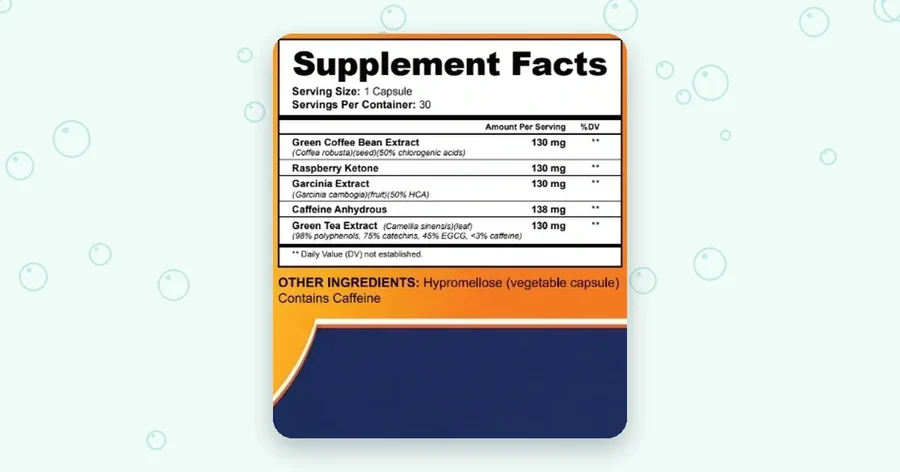
SodaSlim has a green coffee row of 130 mg, and no trial tested it. The lesson is not that every ad is false. It is that one headline study can fall apart, so read how it was run.
Reviews
How can you spot fake supplement reviews?
Fake reviews are hard to spot by eye, which is why the FTC has a rule against them. Look for what a review cannot hide: where it came from.
The FTC rule on reviews bans fake and bought reviews, and its question-and-answer page explains what counts (FTC fake reviews rule) (FTC reviews rule Q&A). A page that shows star ratings, customer counts or percentages without a source is showing numbers anyone could type.
- Many reviews with the same phrases, dates or photos.
- Names with no order check, or a rating with no review count source.
- Praise for results the label itself does not claim.
- No negative or neutral reviews at all.
This site shows no SodaSlim ratings or quotes, because none has been matched to a real order. It prints a labelled empty slot instead, on the reviews page.
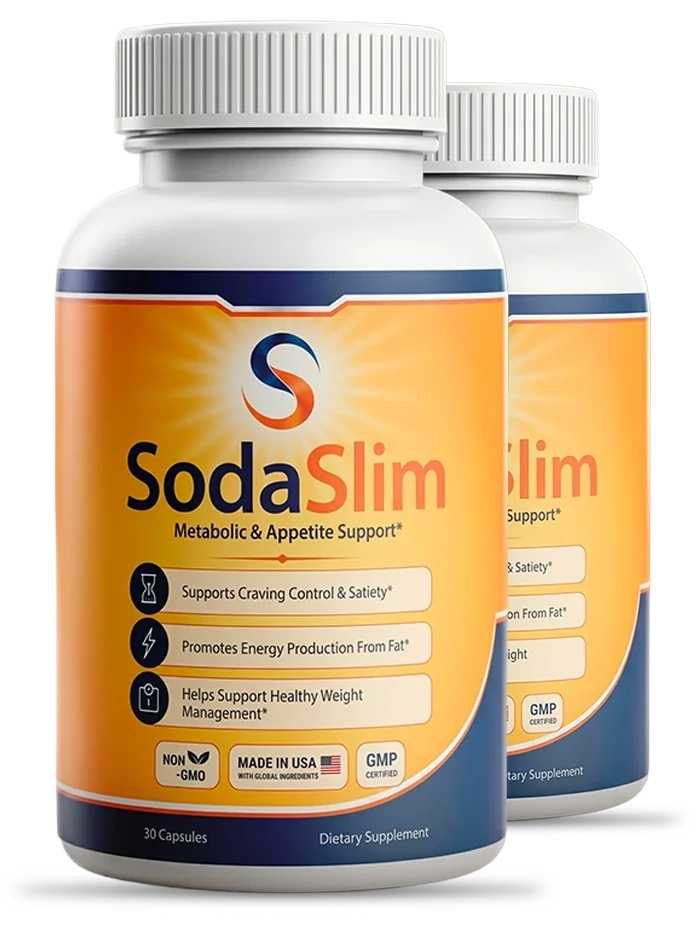
SodaSlim capsules: 30 to a bottleOne capsule a day · 2, 3 or 6 bottles · price and shipping shown at checkout
See the priceTry it on SodaSlim
How do SodaSlim's own claim lines hold up?
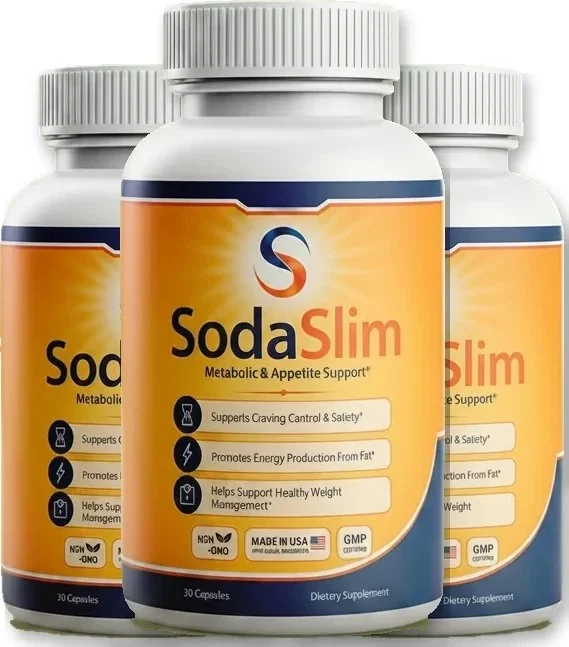
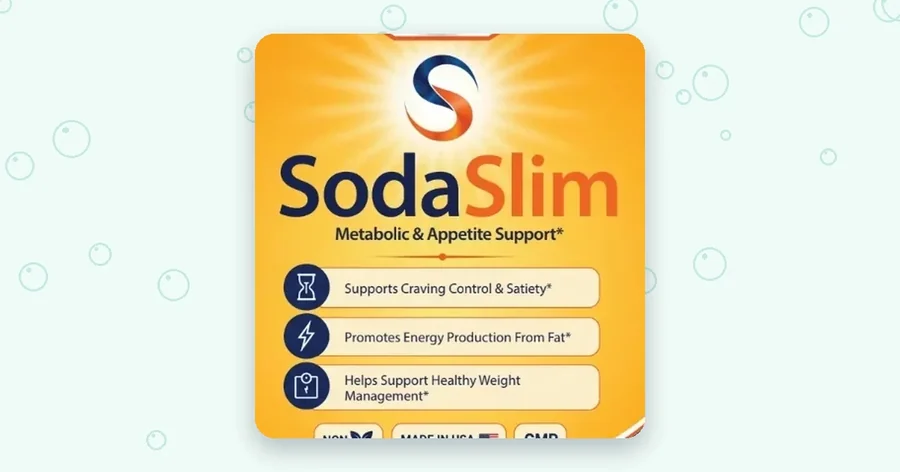
The four lines on the label and seller page each say less than they sound like, and each stays in quotation marks here because no trial supports it for this capsule.
Tap each node below to see the claim line and what sources found. The front line reads "Metabolic & Appetite Support*"; the other starred lines read "Supports Craving Control & Satiety*", "Promotes Energy Production From Fat*" and "Helps Support Healthy Weight Management*". The star leads to the FDA statement that these claims have not been evaluated.
“Supports Craving Control & Satiety*”
We found no trial of this five-row capsule on cravings or fullness; NIH's fact sheet says little is known about weight-loss supplements, and the fullness item our sources do cover is fibre in food. (NIH ODS, Dietary Supplements for Weight Loss) (Wanders 2011, fibre and appetite)
“Promotes Energy Production From Fat*”
A meta-analysis of 13 caffeine trials said caffeine 'might promote' weight loss, with results that varied widely; none tested this capsule. (Tabrizi 2019, caffeine and weight) (NIH ODS, Dietary Supplements for Weight Loss)
“Helps Support Healthy Weight Management*”
Pooled single-ingredient results are small: about 1.23 kg for green coffee, 0.88 kg for garcinia (range touching zero) and 0.04 kg for green tea outside Japan. (Asbaghi 2020, green coffee meta) (Onakpoya 2011, garcinia meta) (Jurgens 2012, Cochrane green tea)
“Reviews prove it works”
Reviews are not evidence of an effect, and fake or bought reviews are banned by an FTC rule. (FTC fake reviews rule) (FTC, Truth Behind Weight Loss Ads)
FAQ
SodaSlim questions people ask
What claims can a weight loss supplement make?
It may describe an effect on normal body structure or function, such as supporting weight management, if the label carries the FDA disclaimer. It may not claim to treat or prevent a disease. Either way, the FTC expects reliable scientific evidence behind the claim.
Are testimonials proof that a supplement works?
No. The FTC says testimonials are not proof of a health claim, and its rule bars fake and bought reviews. One person's photo or story does not show what a product does for others.
What are FTC weight loss claims cases about?
They are about advertising that promised results without reliable evidence. In 2014 one case involved a green coffee extract ad that leaned on a flawed trial, and a separate 2014 sweep involved about 34 million dollars.
How do I check a study cited in an ad?
Ask who was tested, what dose, for how long and what the outcome was in kilograms. Then compare with the product. If the study used another product or a much larger amount, it does not describe the one you are buying.
Is a before-and-after photo reliable?
A photo shows one person at two moments, with no control, no record of other changes and no way to know if the result is typical. It cannot prove that a product caused the difference.
How do I report a bad supplement or false ad?
Report a bad reaction to FDA, which explains how and which signs are serious. For a false ad, the FTC is the agency that polices advertising. Keep the bottle, the lot number and a copy of the ad.
Who wrote this
Written and reviewed by
Pages built from the label, the seller's brief and linked NIH, FDA, CDC, FTC and peer-reviewed sources.
Last updated . Read our editorial standards and how we check reviews. This website is the information site of a USA Authorized SodaSlim Retailer. It is not the manufacturer, and the label names Gex Corporation LLP (Ogden, Utah) as the distributor. We earn money when you buy through our order links.
Keep reading
More about SodaSlim
USA Authorized SodaSlim Retailer
Ready to look at SodaSlim?
Check your medicines and your caffeine first, and ask a clinician if you are unsure. Then pick a pack: 2, 3 or 6 bottles of 30 capsules. The checkout shows the price, the shipping and the money-back guarantee as printed there.
- Secure checkout on the seller's site
- Money-back guarantee, as printed at checkout
- Shipping shown at checkout